Velotric Discover 2 review
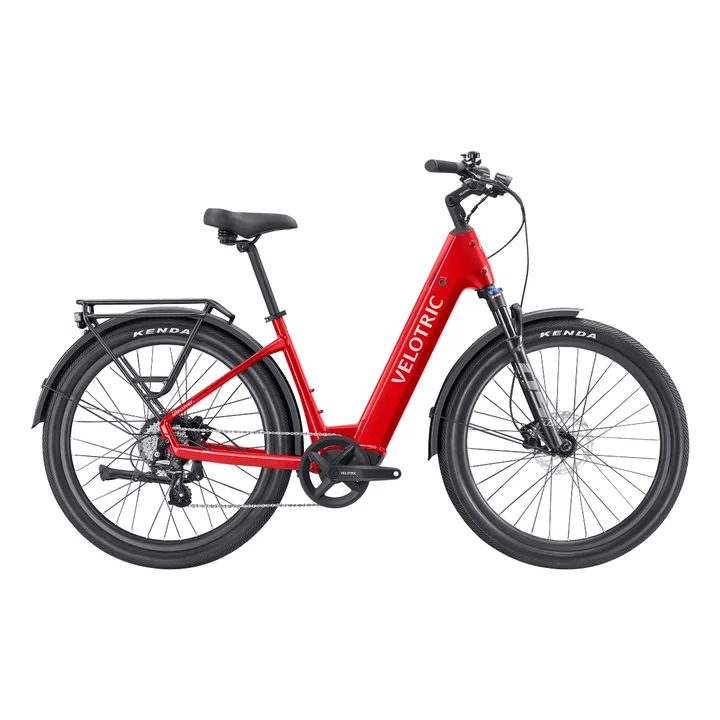
The most comfortable commuter here. A torque sensor, a low step-through, a long-range battery and a smooth ride make the Discover 2 an easy daily driver.
Check price at Velotric →- Torque sensor for a natural ride
- Low step-through, easy to mount
- Long range, up to 75 mi
- Comfortable upright geometry
- UL-certified battery
- On the heavier side at 63 lbs
- Tuned for comfort over sportiness
- App can be fiddly
- Premium price for the category
I've ridden plenty of commuter ebikes that try to be sporty, and the Velotric Discover 2 isn't one of them. That's a compliment. This is a $1,699 step-through built around comfort: a torque sensor, an upright seating position, and a low frame you can swing a leg over without yoga. After a couple weeks of real miles, my verdict is simple. If you want a relaxed, sit-up-and-cruise daily ride that feels natural under power and doesn't beat you up, the Discover 2 is one of the easiest bikes here to recommend.
It won't thrill anyone chasing acceleration, and the 63 lb weight is real the moment you have to carry it. But for the rider who just wants to get to work, the store, or the trail without thinking about it, this thing nails the brief.
How the Discover 2 actually rides
The first thing you notice is the seating position. The Discover 2 puts you upright with the bars high and back, so your weight sits on your hips instead of your wrists. For a daily commute or a relaxed weekend loop, that geometry matters more than almost any spec. After 10 miles your hands and shoulders aren't aching, and you can actually look around at traffic instead of staring at your front tire.
The 750W hub motor makes a claimed 75Nm of torque, and the assist comes on smooth and predictable. That's down to the torque sensor, which scales the help to how hard you're actually pushing rather than just dumping a fixed level of power the second the pedals move (here's why that distinction matters). It feels like the bike is helping you ride. You pedal harder, you get more help. You ease off, it backs off. If you've only ridden a cheaper cadence-sensor ebike, the difference is night and day: no lurch off the line, no awkward surge a half-second after you push off.
As a Class 1, 2, or 3 bike, you can set it up for pedal assist only or add throttle, and unlock it to 28 mph when you want to keep pace with traffic. Honestly, though, the Discover 2 is happiest cruising in the low-to-mid 20s. It's not a rocket and doesn't pretend to be. Push it hard from a stop and you'll feel the weight, but settle into a steady commute pace and it's serene.
Real-world range vs the 75 mile claim
Velotric advertises up to 75 miles from the 706Wh battery. Like every range claim in this category, that's a friendly best-case figure, so shave a third or more off it for the kind of riding you'll actually do (we break down the math here).
In practice, that lands the Discover 2 somewhere around 40 to 50 miles of mixed riding for an average rider using moderate assist with some hills, throttle, and stop-and-go. Crank the assist to max, add a heavier rider, a headwind, or cold weather and you'll see closer to 30 to 35. Baby the throttle on flat ground in eco mode and you might flirt with the advertised number, but that's not how anyone actually commutes.
The good news: even a real 40 mile range covers a multi-day commute for most people, so you're charging a couple times a week, not nightly. And the cells are UL-certified, which I care about more than I used to. Battery safety standards in this category have been all over the map, and a UL-listed pack means the cells have passed independent testing for a bike that lives in your hallway or garage.
The weight, the brakes, and living with it
Let's talk about the 63 lbs, because it's the one thing that'll surprise people. On the road you never feel it; the motor handles the heft. But the moment you need to lift the Discover 2 up a flight of stairs, hang it on a hitch rack, or wrestle it into a hallway, those pounds are very real. If you live in a third-floor walk-up, this is a hard bike to love. If you roll it straight out of a garage and back in, you'll never think about it again. Be honest with yourself about your living situation before you buy.
The braking is solid. Stopping power is confident and progressive without being grabby, which suits the bike's relaxed character. It hauls down a 63 lb bike plus rider from speed without drama, and that's exactly what you want on a commuter that spends its life in city traffic.
On the comfort front, the upright geometry does a lot of the work, and the wider commuter tires take the edge off rough pavement and gravel paths. It's not a full-suspension trail bike, but for cracked city streets and the occasional crushed-stone trail, the ride stays smooth and planted. For more on the safety classes and where a Class 3 bike is legal to ride, see our breakdown of ebike classes.
The app quirks and ownership notes
Velotric leans on its app for unlocking speed classes, adjusting assist behavior, and the connected features. When it works, it's handy. But I'll be straight: app-dependent ebikes are a mixed bag, and the Discover 2 is no exception. Pairing can be finicky, occasional reconnects are part of the deal, and you'll want to make sure your core settings are dialed in so you're not fishing for your phone at every stoplight. None of it is a dealbreaker, but if the idea of an ebike that needs a smartphone to reach its full speed annoys you, factor that in.
For ownership, the basics apply. Keep the tires aired up to the sidewall range; under-inflated wider commuter tires kill range and make the bike feel sluggish. Don't store the battery dead or fully charged for months; somewhere around 40 to 70 percent is kindest to the cells. And give the chain a wipe and a light lube every few hundred miles, more if you ride in the wet. Do that and a torque-sensor commuter like this should give you years of low-drama service. Most issues people hit are sensor or display gremlins, not motor failures, and those are usually a firmware update or a dealer fix away.
When you're ready to check current pricing or color availability, you can see the Discover 2 at Velotric.
Discover 2 vs the Aventon Level 3 and Ride1Up 700
The Discover 2's most direct rival is the Aventon Level 3, also $1,699. Both are 28 mph commuters with torque sensors and polished apps, so the choice comes down to character. The Level 3 is the sportier, more aggressive feel, with a slightly lower-slung stance and a 733Wh LG-cell battery. The Discover 2 is the comfort pick: more upright, easier step-through, and that relaxed posture that makes long rides effortless. If you want to feel quick and connected to the road, the Level 3. If you want to sit up and cruise without strain, the Discover 2. There's no wrong answer; they're tuned for different riders. We pit them directly in our Level 3 comparison if you want the deeper dive on the Aventon side.
Against the $1,595 Ride1Up 700 Series, the gap is mostly about the sensor. The 700 Series is a genuinely good commuter that comes with a rack and fenders included, and it undercuts the Discover 2 on price. But it runs a cadence sensor, so the power delivery is more on-off than the Velotric's smooth, proportional torque assist. If you've never ridden either, you might not miss it. If you've felt a good torque sensor, going back to cadence feels clunky. The 700 Series also has a slightly smaller real-world range and a sportier, less upright fit. For a comfort-first buyer, the Discover 2 earns its higher price. For someone who wants the most commuter bike for the dollar and doesn't mind a cadence sensor, the 700 Series is the value play.
| Bike | Price | Sensor | Battery | Best for |
|---|---|---|---|---|
| Velotric Discover 2 | $1,699 | Torque | 706Wh | Upright comfort, relaxed daily rides |
| Aventon Level 3 | $1,699 | Torque | 733Wh LG | Sportier feel, premium app |
| Ride1Up 700 Series | $1,595 | Cadence | 720Wh Samsung | Value, rack and fenders included |
Who should buy it, and who should skip it
Buy the Discover 2 if comfort is your top priority. It's ideal for the rider returning to bikes after years off, anyone with back or wrist issues who can't tolerate a hunched-over position, and commuters who value a low, easy step-through. It's also a strong choice for older riders for the same reasons; our guide to ebikes for seniors goes deeper on that fit. The torque sensor and UL-certified battery make it feel like a more grown-up, trustworthy bike than its price suggests.
Skip it if you want acceleration and a planted, sporty stance; the Level 3 or a sportier commuter will satisfy you more. Skip it if you live up several flights of stairs and have to carry the bike, because 63 lbs is no joke. And skip it if app-dependent features genuinely bother you. For everyone else who just wants a calm, capable, comfortable way to get around, the Discover 2 is one of the most likable bikes in this lineup. You can check the latest price here, or compare it against the rest of our top commuter ebikes. Curious how we put these bikes through their paces? Here's how we test.
Check current pricing and color options direct from Velotric. They ship nationwide and run regular sales.
Affiliate link. We may earn a commission at no extra cost to you. It never changes our rankings (see how we test). We ride every bike before we recommend it.
Frequently asked questions
What is the real range of the Velotric Discover 2?
Velotric advertises up to 75 miles, but that's a best-case lab figure at the lowest assist on flat ground. In real mixed riding with hills, throttle, and a normal rider, expect roughly 40 to 50 miles on moderate assist, dropping to around 30 to 35 on max assist or in cold and windy conditions. That still covers most commutes for several days between charges.
Does the Discover 2 have a torque sensor or a cadence sensor?
It uses a torque sensor, which reads how hard you push the pedals and delivers power in proportion. The result is smooth, natural assist with no lurch off the line, and it backs off when you ease up. This feels noticeably more refined than the cadence sensor on bikes like the Ride1Up 700 Series, where power tends to come on more like an on-off switch.
Is the Velotric Discover 2 good for commuting?
Yes, it's one of the better comfort commuters in this price range. The upright geometry keeps your wrists and back happy on longer rides, the torque sensor makes power delivery effortless, and Class 1, 2, and 3 modes let you ride at up to 28 mph where allowed. The main commuting drawback is the 63 lb weight if you have to carry it up stairs.
Velotric Discover 2 vs Aventon Level 3, which is better?
Both cost $1,699 and use torque sensors, so it comes down to riding character. The Discover 2 is the comfort pick with an upright, low step-through stance that suits relaxed daily riding. The Level 3 feels sportier and more aggressive with a slightly bigger LG-cell battery. Choose the Discover 2 for comfort, the Level 3 if you want a quicker, more connected feel.
Is the Velotric Discover 2 battery safe?
The Discover 2 uses a UL-certified battery, which means the cells and pack have been independently tested to recognized safety standards. Battery quality has been inconsistent across budget ebikes, so a UL listing is genuine reassurance for a bike that charges and stores inside your home. As always, avoid storing it fully dead or fully charged for long periods to extend its life.

I wrench on and ride these bikes year round, and I write every review and guide here. I rank by what holds up on real roads, not by who pays the most. How we test →