Rad Power RadRunner Plus review
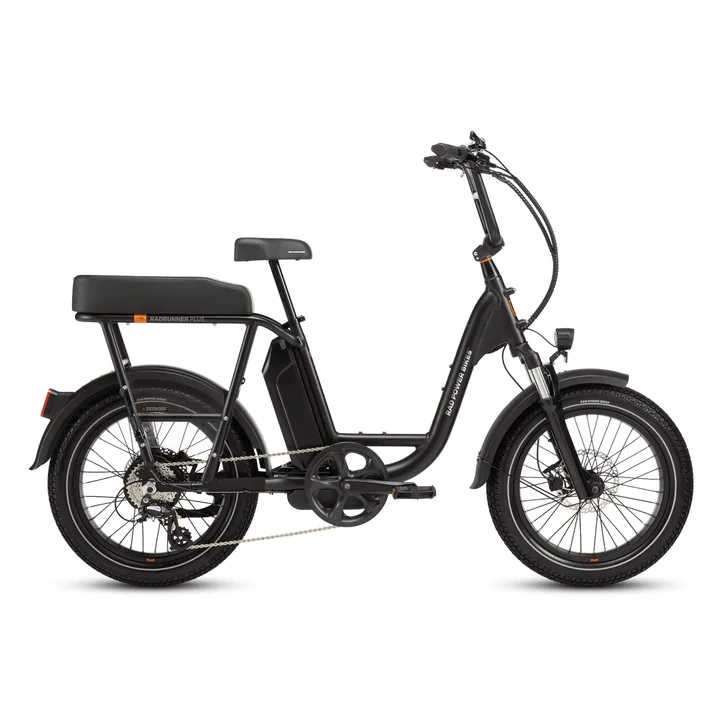
A do-anything utility ebike that carries cargo, kids or a passenger. The low step-through and huge accessory range make it the easy pick for hauling, if 20 mph is enough.
Check price at Rad →- Carries cargo, kids or a passenger
- Massive accessory ecosystem
- Low, easy step-through
- US support and dealer network
- Stable, planted ride
- Class 2 tops out at 20 mph
- Heavy at 75 lbs
- Cadence sensor assist
- Range is modest for the weight
The RadRunner Plus is the bike I point friends to when they tell me they want a car replacement, not a toy. It is a $1,799 utility platform built around one job: moving you, a passenger, and a load of stuff around town without drama. I have ridden plenty of these, wrenched on a few, and the verdict is simple. If your life involves a kid seat, grocery runs, and short hops, this thing earns its keep. If you want to keep up with traffic on a fast commute, it will frustrate you.
Here is the short version before I get into the weeds: rock-solid stability, an accessory catalog nobody else touches, real US-based support, and a deliberately capped 20 mph top speed. That cap and the 75 lb curb weight are the price of admission. Below I cover how it actually rides and who it is really for.
How the RadRunner Plus actually rides
First thing you notice swinging a leg over it: the low step-through frame and the long, flat seat make this feel less like a bike and more like a moped you pedal. The geometry is upright and relaxed, with wide handlebars that give you leverage when the bike is loaded. That matters. A heavy utility bike with twitchy steering is dangerous, and this one is the opposite. It tracks straight even with a passenger on the back and a full front basket.
The 750W rear hub motor pushes hard off the line, which is exactly what you want when you are starting from a dead stop at a red light carrying 80 lbs of kid and cargo. Where it gets honest is the assist feel. The RadRunner Plus runs a cadence sensor rather than a torque sensor, so power arrives in a slight lurch and trails off a beat after you stop pedaling instead of metering to your effort (here is what that difference feels like). After a few rides your legs learn to feather it, but compared to a torque-sensor bike it feels more like a switch than a dial. For a hauler doing stop-and-go errands, I can live with it. If you obsess over a natural, bike-like feel, you will notice it on every pedal stroke.
Braking is solid for a bike this heavy. You are stopping 75 lbs of bike plus whatever you loaded on, so respect the weight, give yourself extra room, and do not expect to brake late. On flat ground around town it is composed and predictable.
Hills, weight, and the 20 mph cap
Three things define this bike's limits, and you should understand all three before you buy.
On hills, the 750W motor does fine with a single rider on moderate grades. Load it down with a passenger and cargo on a steep climb, and the cadence sensor plus the bike's weight mean you will be pedaling harder and watching your speed drop. It will get up the hill, just not effortlessly. This is a town bike, not a mountain goat. If your daily route has a brutal climb, factor that in.
The weight is real. At 75 lbs, the RadRunner Plus is not something you carry up a flight of stairs or lift onto a standard car rack without a fight. Storage and parking need to be ground-level or you will resent it. Plan for that before it shows up.
Then there is the speed. The RadRunner Plus is a Class 2 bike capped at 20 mph with both throttle and pedal assist. That is the headline trade-off. Bikes like the Aventon Level 3 and Velotric Discover 2 will hit 28 mph as Class 3 machines. The RadRunner will not. For neighborhood riding, bike paths, and short urban hops, 20 mph is plenty and arguably safer with a load. For a commute where you are sharing fast roads with cars, 20 mph leaves you feeling like a rolling speed bump. Be honest with yourself about your routes. If you regularly want to go faster, this is the wrong bike, and you should look at my best commuter electric bikes guide instead.
Real range vs the advertised number
Rad Power lists 55+ miles of range on the 624Wh battery. Like every spec on a box, that figure comes from the gentlest possible test, so shave a third or more off it once you start hauling weight (the math is in my range guide). The way most people ride a utility bike is the exact opposite of that gentle test.
If you are using throttle a lot, carrying a passenger, and climbing, I would budget around 25 to 40 miles per charge for honest planning. Pedal more, stay in lower assist, and you can stretch it higher. The point is do not buy this expecting 55 miles while you ferry kids and groceries uphill. You will be disappointed and stranded.
The 624Wh pack is on the smaller side compared to rivals. The Ride1Up 700 Series carries a 720Wh Samsung battery and the Lectric XP4 can be optioned up to 840Wh. For a bike meant to do heavy work, I wish Rad gave it more capacity. The upside: charging is simple, and for short daily loops you will rarely run it down.
The accessory ecosystem and US support
This is where the RadRunner Plus pulls away from everything else, and it is the real reason to buy one. Rad Power has built the deepest accessory catalog in the business. Passenger seats and footpegs, front racks, large baskets, running boards, panniers, child seat mounts, even a center console. The bike is designed from the ground up to be a modular platform, and the parts actually fit because they are made for it. Nobody else comes close on breadth.
That ecosystem is the difference between a bike that hauls cargo and a bike you can genuinely configure into a one-kid school-run machine or a two-person date-night cruiser. The passenger setup is legit. Add the seat and pegs and a second adult rides comfortably, which a lot of so-called cargo bikes cannot honestly claim.
The other piece is support. Rad Power is a US company with US-based customer service and a real parts pipeline. When something needs a replacement, you are not chasing an overseas warehouse and waiting weeks for a part that may never arrive. For a bike that becomes part of your daily logistics, that responsiveness is worth real money. Just know Rad sells consumer-direct, so you assemble it out of the box and most maintenance is on you or your local shop. Budget for a tune at a bike shop after the first month of riding to dial in the brakes and check bolt torque. If you have never bought online before, my how to buy an electric bike walkthrough covers what to expect.
Who it is for, and who should skip it
The RadRunner Plus is the perfect bike for the family hauler who lives in a town with bike paths and reasonable hills, parks at ground level, and values carrying capacity over speed. If you want to replace short car trips, drop a kid at school, do the grocery run, and carry a partner on the back without buying a $4,000 dedicated cargo bike, this is the value play. The stability is confidence-inspiring, the platform is endlessly configurable, and the support is real.
Skip it if any of these describe you. You want 28 mph for a fast commute on car-heavy roads. You need to carry the bike up stairs or onto a rack. You ride mostly solo with no cargo and want the most natural pedal feel, in which case a lighter torque-sensor bike like the Velotric Discover 2 makes more sense. Or you have a steep daily climb with a heavy load, where the cadence sensor and modest battery will wear on you.
| Factor | RadRunner Plus | What it means |
|---|---|---|
| Top speed | 20 mph (Class 2) | Great for paths, slow for fast commutes |
| Weight | 75 lbs | Ground-level storage only |
| Sensor | Cadence | Less natural than torque rivals |
| Hauling | Passenger and cargo | Best-in-class accessory support |
| Real range | ~25 to 40 mi loaded | Below the 55+ mi claim under load |
If you want the full lineup of haulers I trust, see my best cargo electric bikes roundup. And if budget is the deciding factor, the best budget electric bikes guide has cheaper options that give up the cargo ecosystem.
Ownership tips and the bottom line
A few things from spending real time with these. Keep your tire pressure in check, because a heavy bike on soft tires steers worse and drains range faster. Recharge before the battery hits zero rather than running it flat every ride, since that habit is kinder to a smaller pack over the long haul. Store the battery indoors in cold weather, where capacity drops in winter and a freezing garage robs you of miles. And do that early bolt-torque check, because cadence-sensor utility bikes take real abuse from stop-and-go loads and things work loose.
The bottom line: the RadRunner Plus is one of the most genuinely useful ebikes you can buy if your needs match what it does well. It is stable, it hauls, the accessory catalog is unmatched, and you get real US support behind it. The 20 mph cap, the 75 lb weight, and the cadence sensor are the honest trade-offs, and the advertised range is optimistic under load. Buy it as a deliberate town hauler and you will love it. Buy it expecting a fast commuter and you will return it. If it fits your life, you can check the current RadRunner Plus price at Rad Power. Want a closer look at how the speed classes work before you decide? My ebike classes explainer breaks down Class 2 versus Class 3 in plain terms.
Check current pricing and color options direct from Rad. They ship nationwide and run regular sales.
Affiliate link. We may earn a commission at no extra cost to you. It never changes our rankings (see how we test). We ride every bike before we recommend it.
Frequently asked questions
How fast does the Rad Power RadRunner Plus go?
The RadRunner Plus is a Class 2 ebike capped at 20 mph on both throttle and pedal assist. There is no Class 3 unlock, so 20 mph is the ceiling. That is plenty for bike paths and neighborhood riding, especially with a passenger or cargo aboard. If you need 28 mph for a fast road commute, look at a Class 3 bike like the Aventon Level 3 instead.
What is the real-world range of the RadRunner Plus?
Rad Power advertises 55+ miles on the 624Wh battery, but that is a best-case lab figure. Riding it the way most people do, with throttle use, a load, and some hills, plan on roughly 25 to 40 miles per charge. Pedal more and stay in lower assist and you can push it higher. Always treat any range claim as a ceiling, not a guarantee.
Can the RadRunner Plus carry a passenger and cargo?
Yes, that is the whole point of the bike. With the optional passenger seat and footpegs, a second adult rides comfortably on the back, and the front rack and baskets handle groceries or gear. The low step-through frame keeps it stable when loaded. Rad Power's accessory catalog is the deepest in the business, so you can configure it into a true family or cargo hauler.
Does the RadRunner Plus have a torque or cadence sensor?
It uses a cadence sensor, so power comes on in a slight lurch and lingers a moment after you stop pedaling. It works fine for a stop-and-go utility bike, but it feels less natural than a torque sensor. Rivals like the Velotric Discover 2 and Aventon Level 3 use torque sensors for a smoother, more bike-like feel.
Is the RadRunner Plus worth $1,799?
If you want a stable, configurable hauler for kids, a passenger, and cargo on town streets and paths, yes. The accessory ecosystem and US-based support are genuinely better than the competition, and the bike is built for the job. It is not worth it if you need 28 mph speed, have to carry the bike up stairs, or ride solo and want the most refined pedal feel.

I wrench on and ride these bikes year round, and I write every review and guide here. I rank by what holds up on real roads, not by who pays the most. How we test →